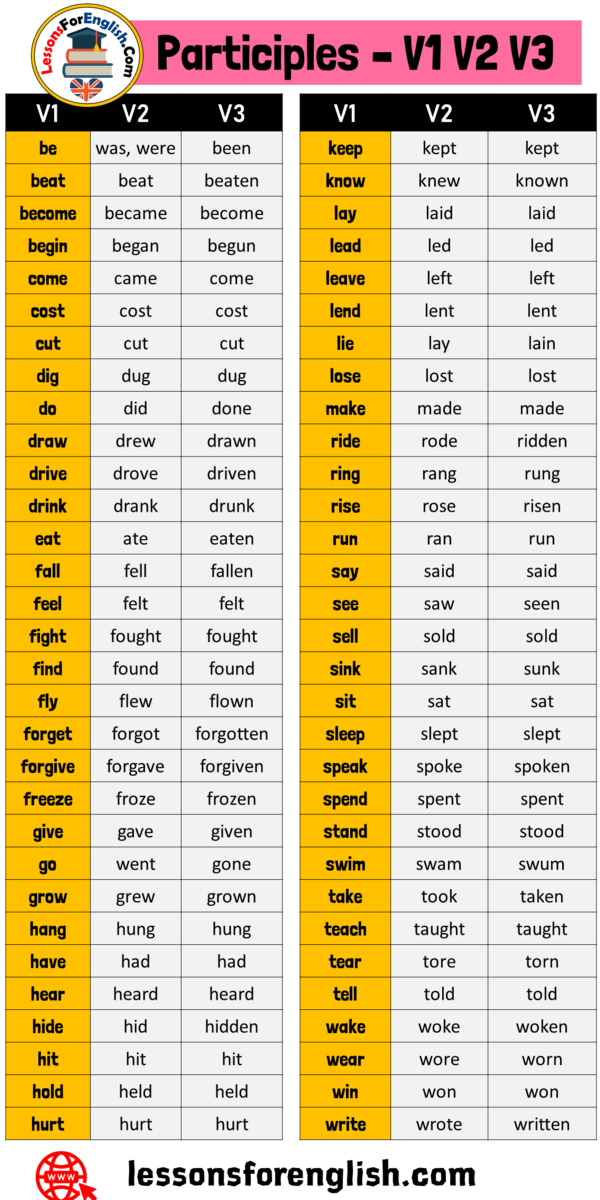
Participles, V1 V2 V3 List Lessons For English
Past Participle Definition. In the English language, there are a few grammatical structures that are used often, but the usage rules are not fully understood or, at least, cannot be easily expressed by most people. One such piece of grammar is the 'past participle', which is a type of verb that describes an action that has taken place in.
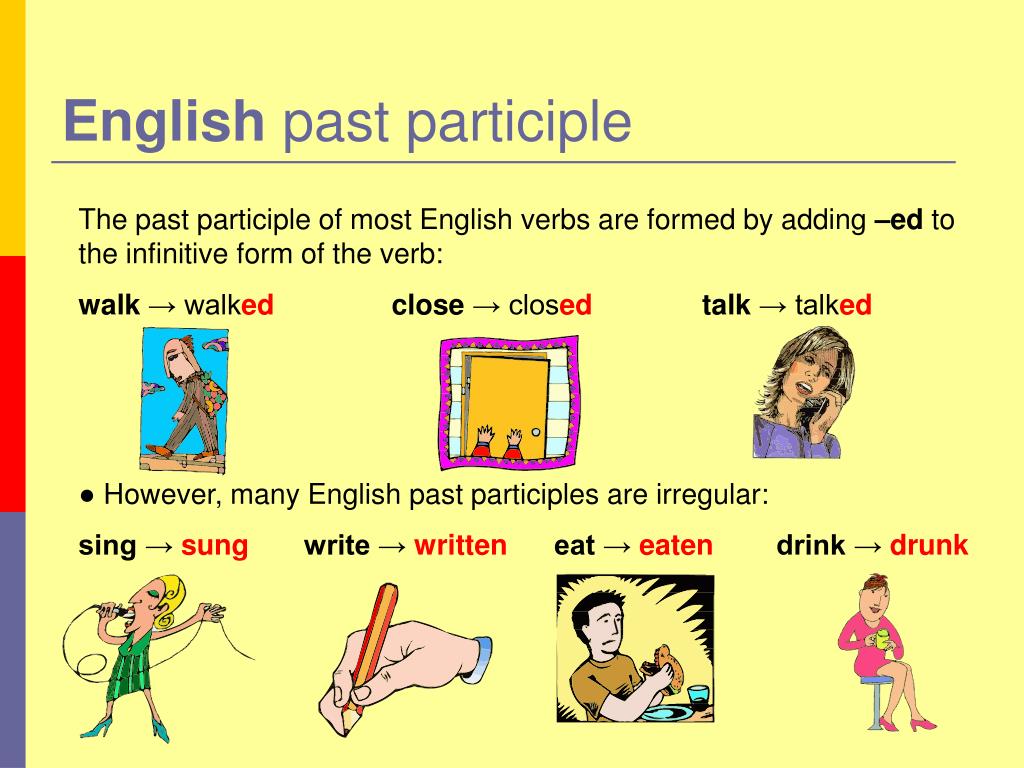
PPT Past participles used as adjectives PowerPoint Presentation, free download ID2977438
A past participle is a word formed from a verb that can be used as an adjective or to form verb tense. Most past participles end -ed, -d, -t, -en, or -n.. If you're learning or teaching English, then it is essential to have a good understanding of participles (past participles and present participles) because adjectives and verb tenses are.
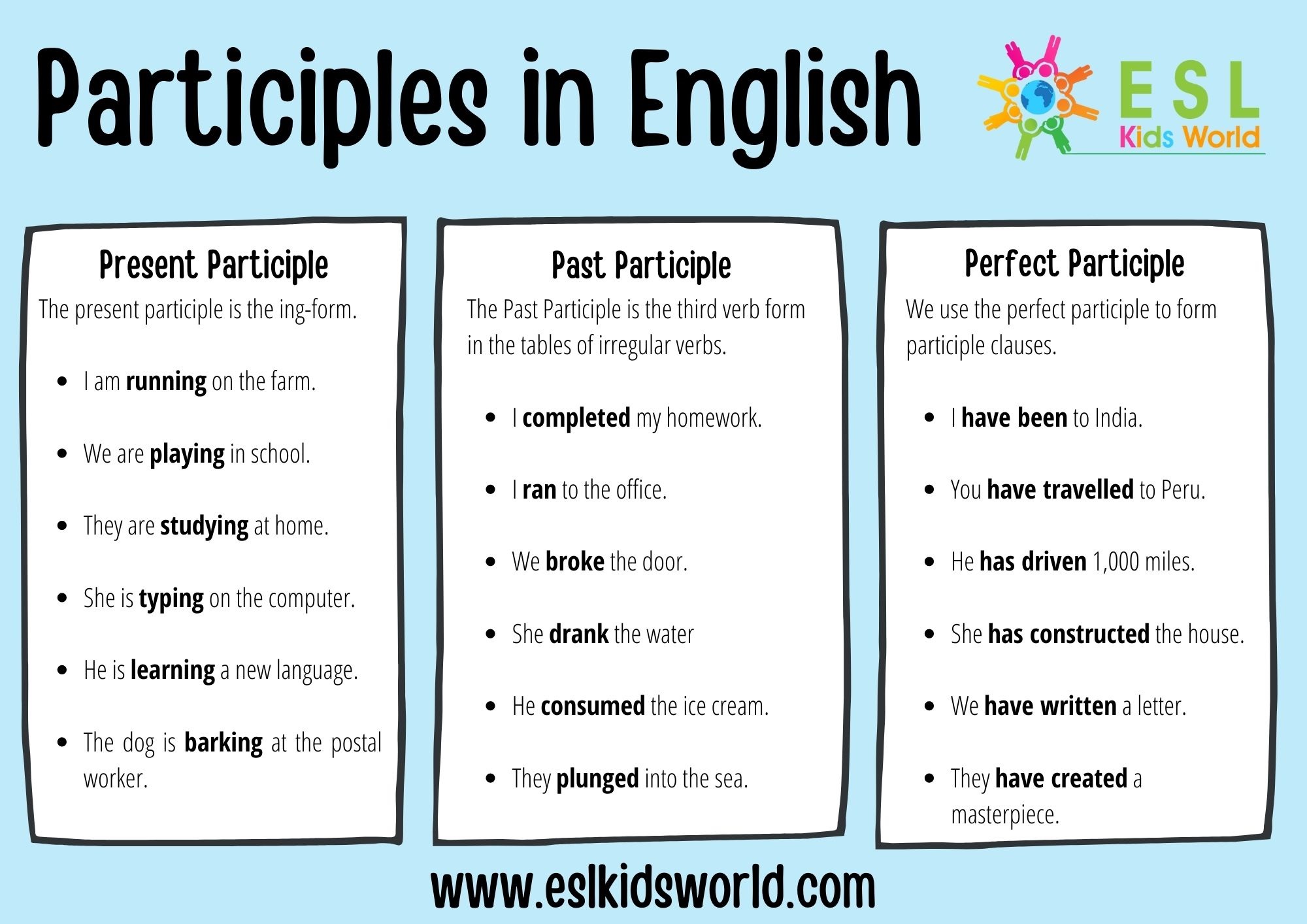
Participle Examples What is a Participle? ESL Kids World
The past participle is sometimes also called the perfect participle or simply third verb form. It is the form of the verb in English grammar that is needed for the formation of the perfect tenses (present perfect, past perfect, future perfect) as well as the passive voice. It can also be used as an adjective.
List of Past Participle Grammar Syntax

A participle is a word derived from a verb that can be used as an adjective or to form certain verb tenses. There are two main types of participles: Past participles (typically ending in "-ed," "-en," "-n," "-ne," or "-t") are used for perfect tenses and passive voice constructions. Present participles (always ending in.
250+ Past Participle Verbs List Vocabulary Point
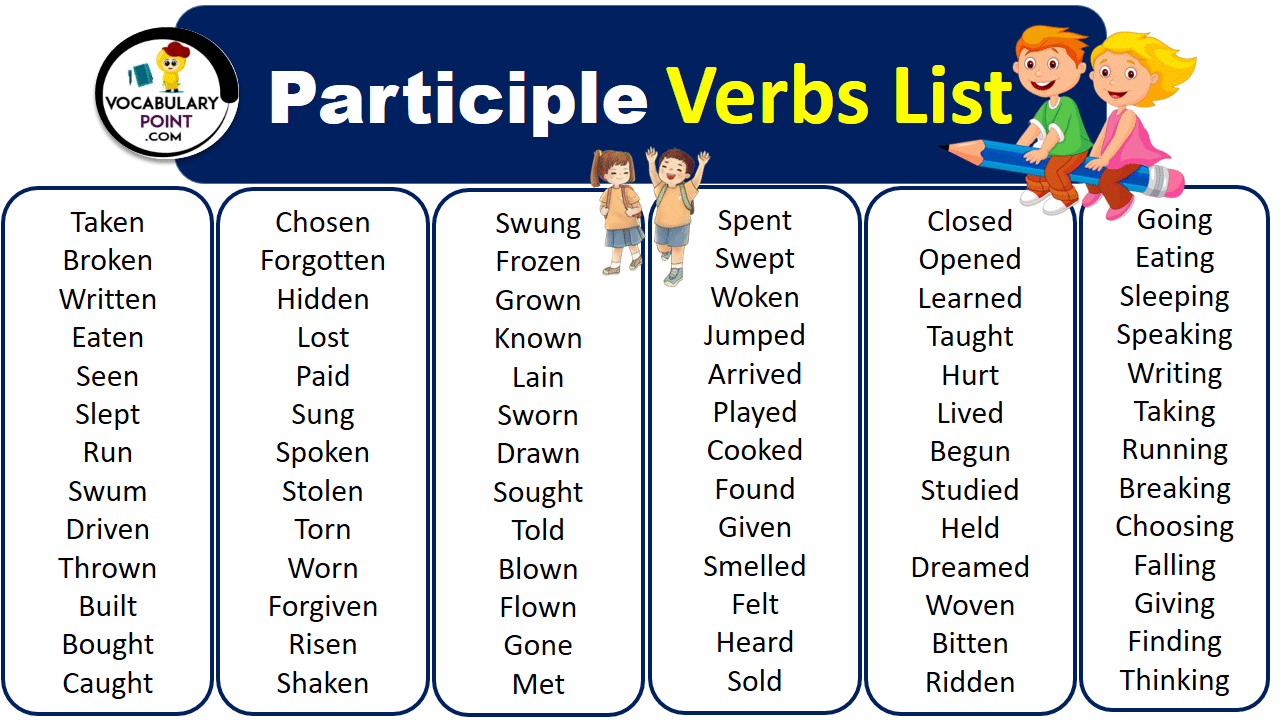
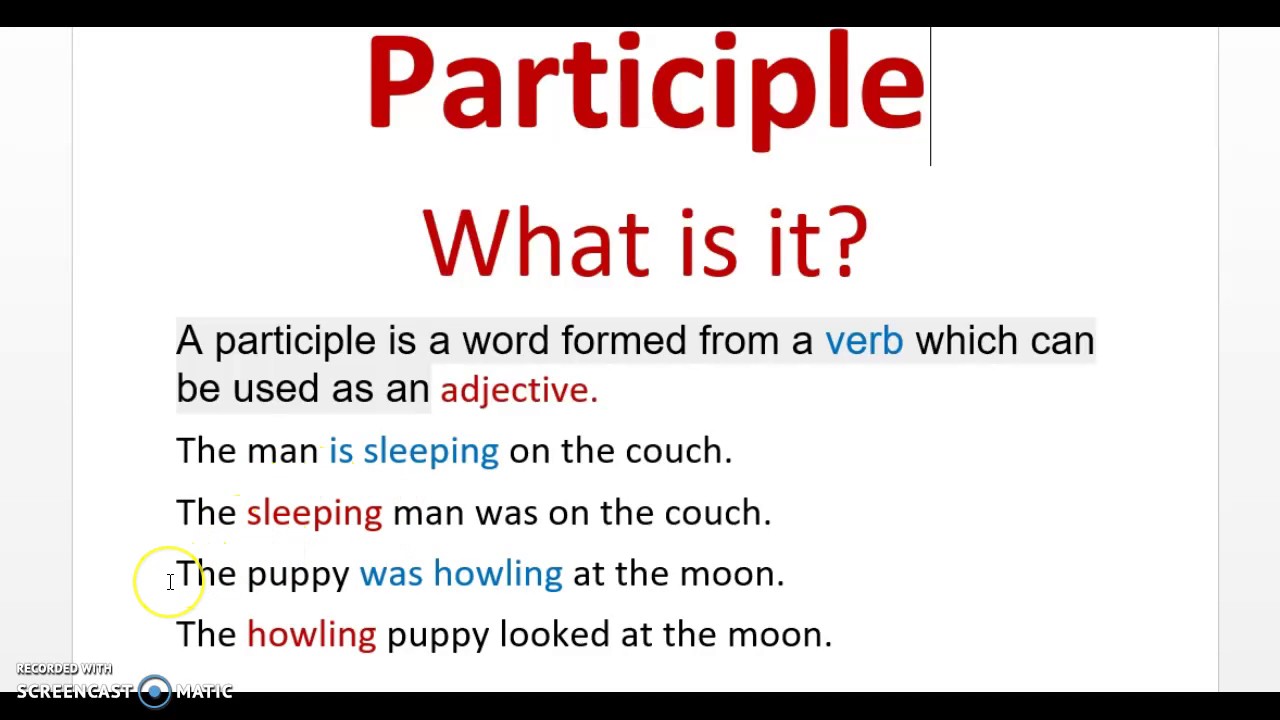
Participles as verbals are a verb form that function like an adjective instead of a verb. The running deer were beautiful! Running is a participle verbal. It looks like a verb, but it acts like an adjective modifying the noun deer. The burned toast tasted awful. In this sentence, burned is a participle verbal.
V1, V2, V3 Present Tense, Past Tense & Past Participle English Grammar Here
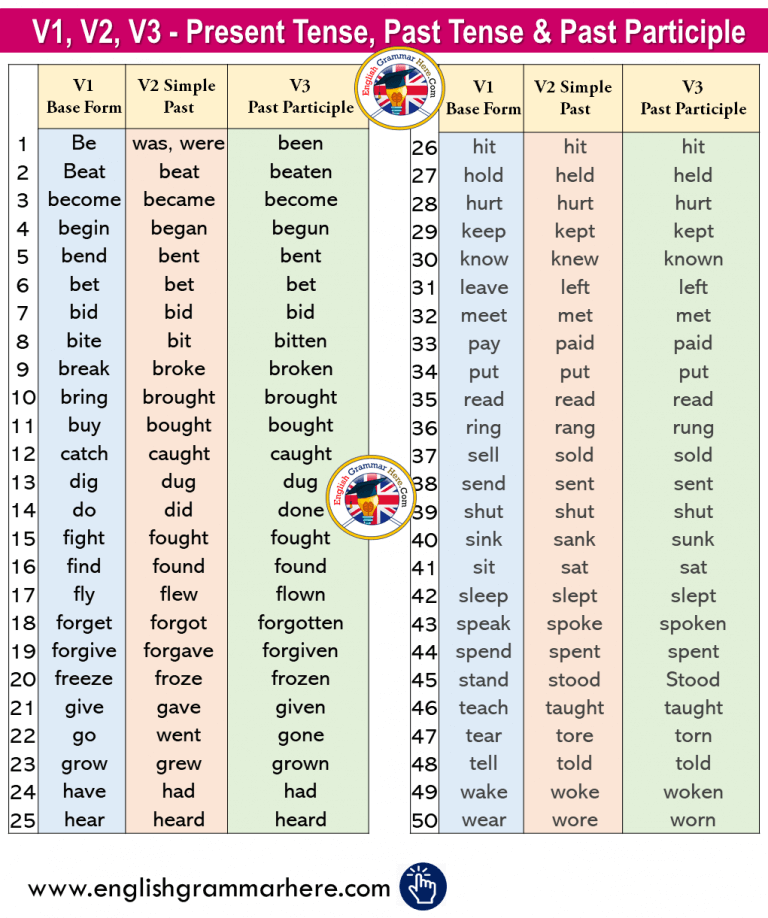
A past participle is a word derived from a verb that can be used as an adjective, to form perfect verb tenses, and to form the passive voice. It is one of two types of participles, along with present participles. The past participles of regular verbs are usually formed by adding the suffix "-ed" (e.g., "learn" becomes " learned ").
Past Participle Definition, Forming Rules and Useful Examples • 7ESL
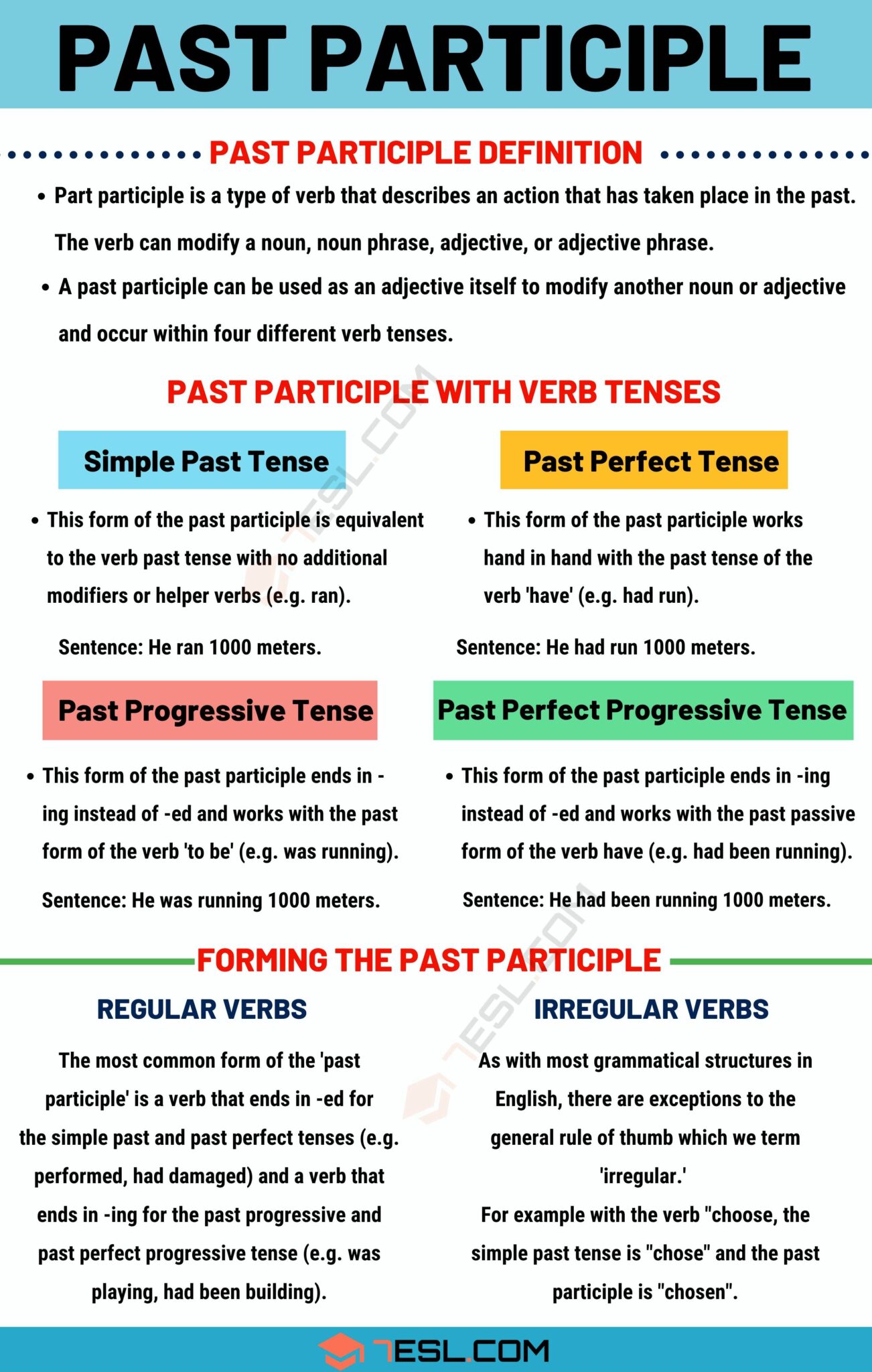
Past participles are used for all perfect tense forms of a verb and in the passive voice in English. For regular verbs, we normally add ED to form its past participle. Unfortunately for irregular verbs there are no rules and it is just a matter of practice. The highlighted words below are examples of past participles: 1. Present perfect
Participles, Definitions and Example Sentences English Grammar Here
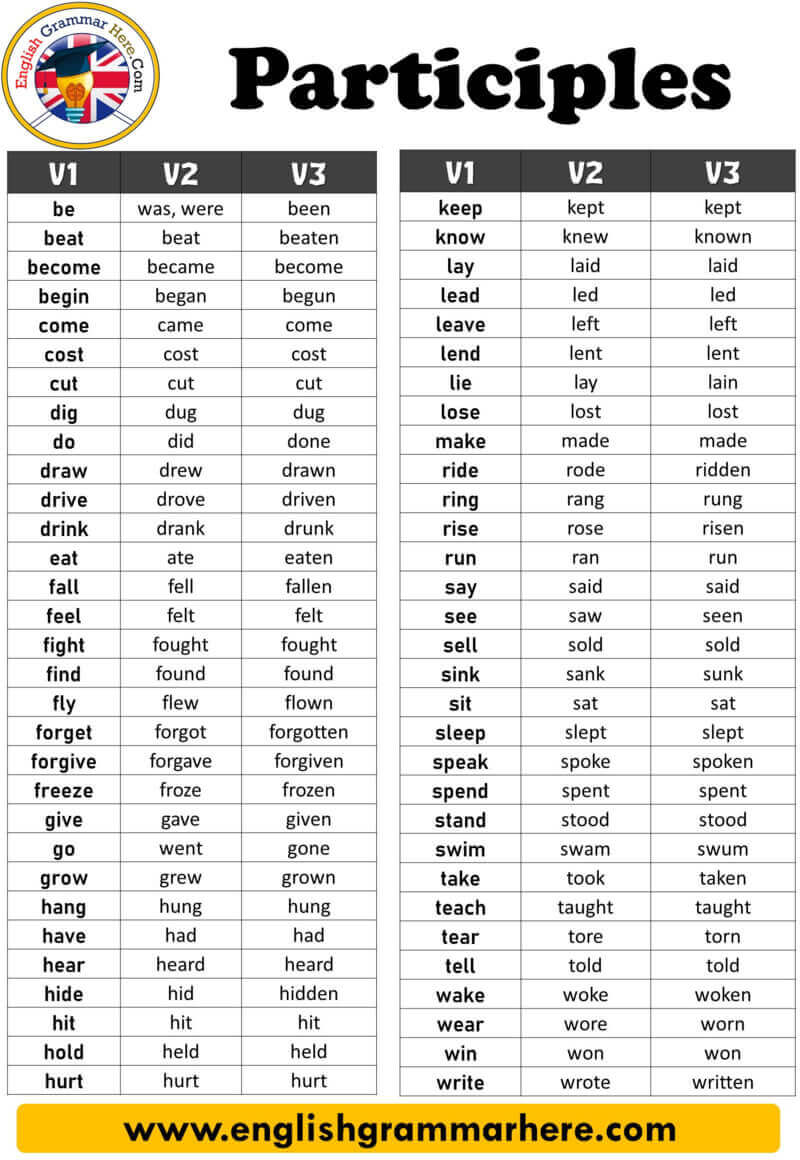
In English grammar, the past participle refers to an action that was started and completed entirely in the past. It is the third principal part of a verb, created by adding -ed, -d, or -t to the base form of a regular verb. The past participle is generally used with an auxiliary (or helping) verb— has, have, or had— to express the perfect.
Past Participle Meanings and Different Forms of Past Participles ESL Grammar
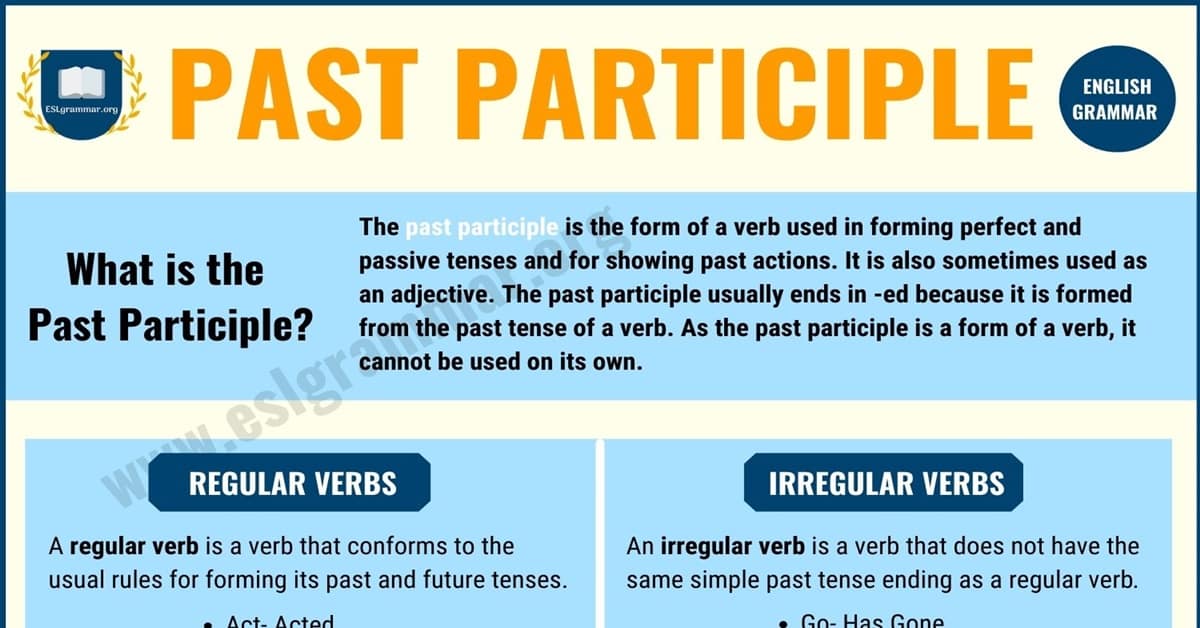
A past participle is a verb form that communicates an action completed in the past. You will typically recognize a past participle as a conjugated verb, such as walked or tried. You might also notice that past participles can resemble the simple past tense of verbs (i.e., I walked to school. ).
Participle Understanding the Basics and Usage in English Grammar ESL Grammar

A past participle can be used before a noun as an adjective. The past participle is used after the 'be' auxiliary verb in the passive voice. The past participle is also used in perfect verb tenses.
Past Participle Definition and Examples
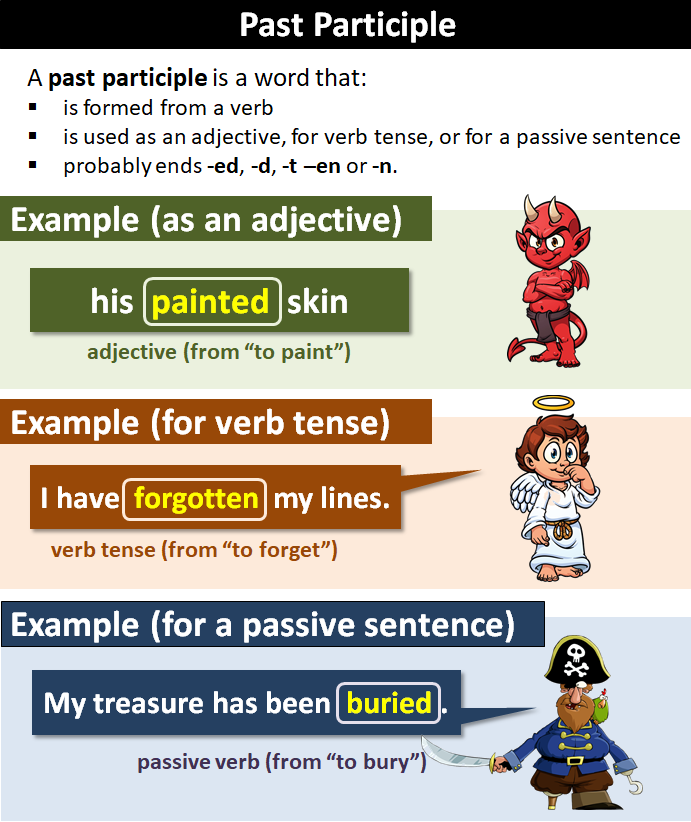
Rule 5: To conjugate the past participle of regular verbs, we add -ed. Here are a few examples: cook - cook ed, show - show ed, jump - jump ed. Rule 6: To conjugate the past participle of irregular verbs, you should find the correct forms in the third column of the verb tables. Here are some of the most common English irregular verbs and their.
Participles What Are Participles? Definition And Examples, 58 OFF
The meaning of PAST PARTICIPLE is a participle that typically expresses completed action, that is traditionally one of the principal parts of the verb, and that is traditionally used in English in the formation of perfect tenses in the active voice and of all tenses in the passive voice. How to use past participle in a sentence.
Participles What Is A Participle? Present & Past Participle • 7ESL English verbs, Verb words

A past participle is a word derived from a verb that can be used as an adjective, to form perfect verb tenses, and to form the passive voice. It is one of two types of participles, along with present participles. The past participles of regular verbs are usually formed by adding the suffix '-ed' (e.g., 'learn' becomes ' learned' ).
1000 Verb List, Past and Past Participle, V1 V2 V3 List English Vocabs

Basically, the past tense is a true verb tense while the past participle is a verb-derived form that has three distinct uses. Since past participle verbs are not tenses, they can't be used on their own. You need an auxiliary verb such as "have" or "had.". Because of this, the past participle is commonly used as a compound verb.
Past Participle

A participle is a form of a verb used as either an adjective ("the hidden treasure") or a part of certain tenses ("we are hiding the treasure"). Participles have two different types, the present participle and past participle, and participles used as adjectives can form a longer participle phrase (" Hidden in the bushes, the treasure was hard to see").
listofpastparticiple.pdf Grammar Syntax

Define past participle: In grammar, the definition of past participle is a nonfinite verb used to signify a perfective aspect. In summary, a past participle is formed from the past tense of a verb. It is used to create verb forms and may also modify nouns, noun phrases, adjectives, and adjective phrases.
.